
Fight results: Joshua stops Paul in Round 6, Baumgardner wins
The recent boxing match between Anthony Joshua and Jake Paul has ignited a firestorm of discussion, moving beyond the simple outcome of Joshua's sixth-round knockout victory. The narrative has been significantly complicated by Paul's claim of sustaining a "double broken jaw,"
SPORTS
Hashitha
12/20/20252 min read
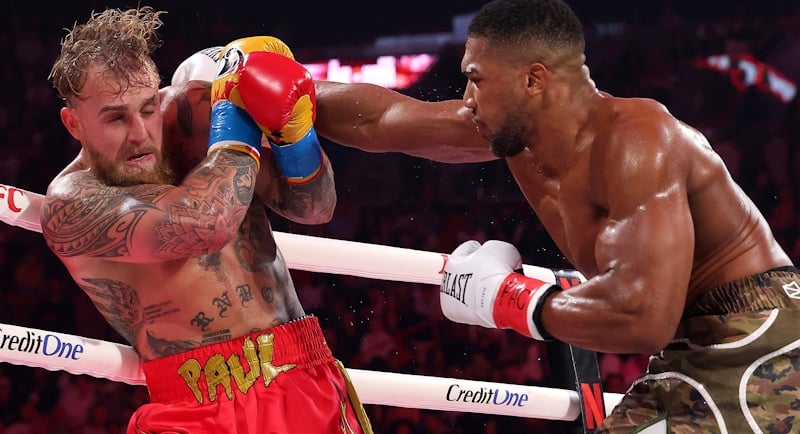
The recent boxing match between Anthony Joshua and Jake Paul has ignited a firestorm of discussion, moving beyond the simple outcome of Joshua's sixth-round knockout victory. The narrative has been significantly complicated by Paul's claim of sustaining a "double broken jaw," revealed in a post-fight social media update accompanied by an X-ray image. This adds a layer of unexpected drama to a bout already fraught with concerns about the safety and legitimacy of such cross-over events.
Joshua's victory, while decisive, was almost overshadowed by the post-match revelation. The fight itself unfolded largely as predicted, with the experienced and significantly larger Joshua gradually asserting his dominance. Concerns about the mismatch in size and skill, voiced pre-fight, proved valid as Joshua, a two-time heavyweight champion, utilized his power and technique to systematically break down Paul. The final punch, a brutal blow to the jaw, culminated in Paul's fourth knockdown, ending the fight decisively.
However, Paul's announcement of a double broken jaw injects a controversial element into the narrative. While boxing is inherently a dangerous sport with inherent risks of injury, the severity of Paul's alleged injury fuels the ongoing debate about the ethics of pitting a novice boxer against a seasoned professional, particularly one of Joshua's caliber. Some argue that the potential for serious injury, especially given the noticeable size and skill disparity, outweighed any entertainment value the fight might have offered. Others view it as an acceptable risk, highlighting Paul's choice to enter the ring and his willingness to face a formidable opponent.
Moreover, Paul's seemingly nonchalant reaction to the injury, evidenced by his immediate call-out of Canelo Alvarez, raises questions about the sincerity and motivation behind his foray into professional boxing. Is he genuinely committed to the sport, or is this merely a calculated attempt to garner attention and further his brand? The line between genuine athletic ambition and celebrity spectacle continues to blur, leaving many to question the long-term implications of these high-profile crossover events. The incident serves as a stark reminder of the real and potentially devastating consequences of boxing, even in what is often presented as a form of entertainment. Ultimately, the Joshua-Paul fight, and the subsequent injury announcement, forces a critical examination of the intersection of sport, entertainment, and the ethical responsibilities of promoters and participants alike.
Address
No 23 Mudungoda,Hurigaswawa
Contacts
+94 0761622379
hashithajagath4@gmail.com